
Set the acceptance criteria before the build.
The validation plan is defined for the selected product, customer specification, destination market and program risk.
Test what the approved specification requires.
Not every platform needs the same test plan. We first lock the configuration, intended use and destination market, then identify the applicable checks and evidence.
Six areas reviewed by project.
Open a workstream to see the buyer inputs, review scope, expected records and approval route.
Acoustic
Frequency response, THD, SPL, microphone response and left/right balance
Review workstream →BTBluetooth
Pairing, range, stability, compatibility and interference checks
Review workstream →BABattery
Charging, discharging, use-time evaluation and protection behavior
Review workstream →REReliability
Drop, temperature, humidity, charging and control-cycle evaluation
Review workstream →ENEnvironmental
Applicable IPX, ESD, aging and packaging reliability checks
Review workstream →PQProduction QC
IQC, IPQC, functional test, final QC and outgoing inspection
Review workstream →Four checkpoints buyers can define in the validation plan.
The selected model, specification and acceptance criteria determine which checks and records apply.
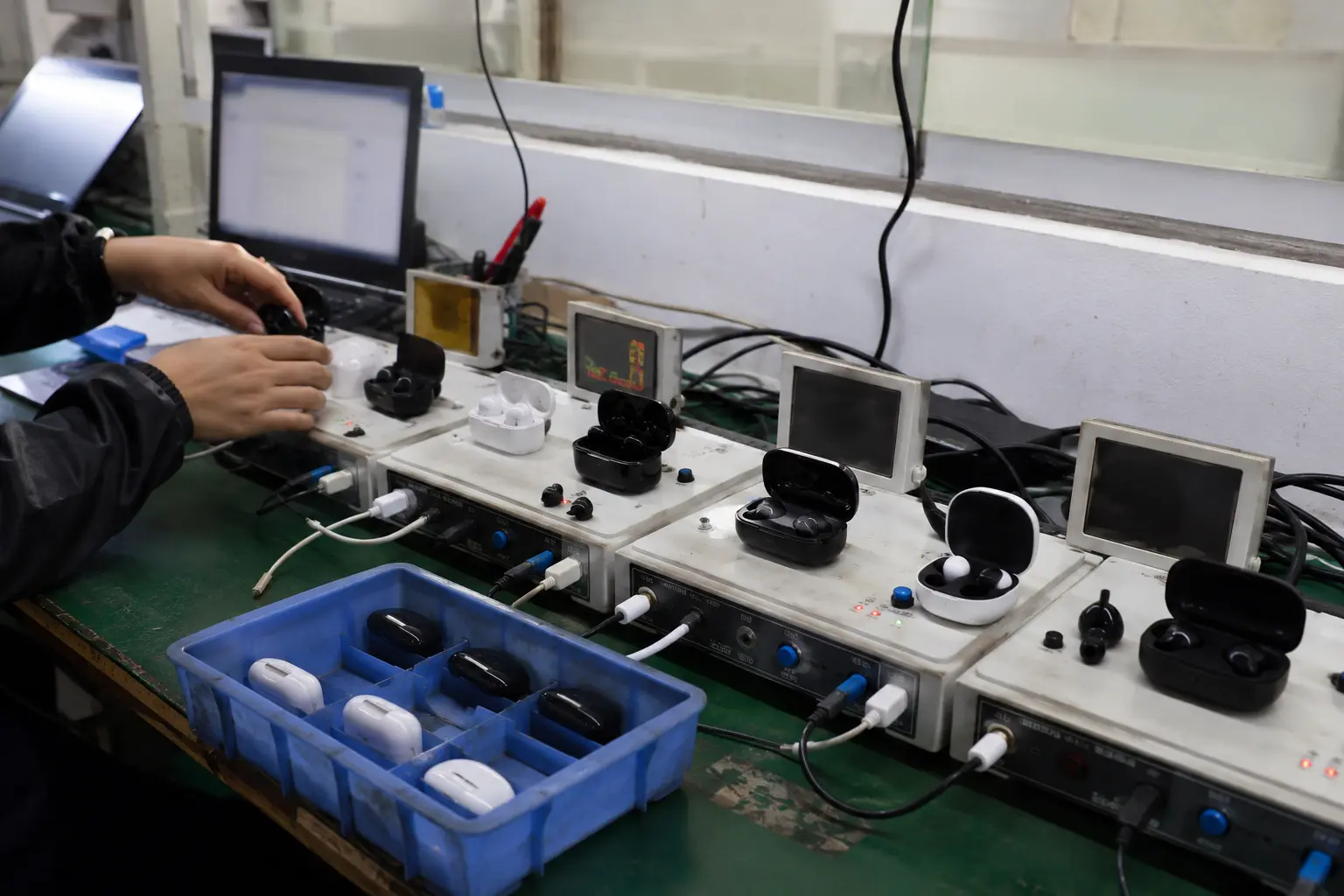
Check pairing, charging, controls and agreed product functions.
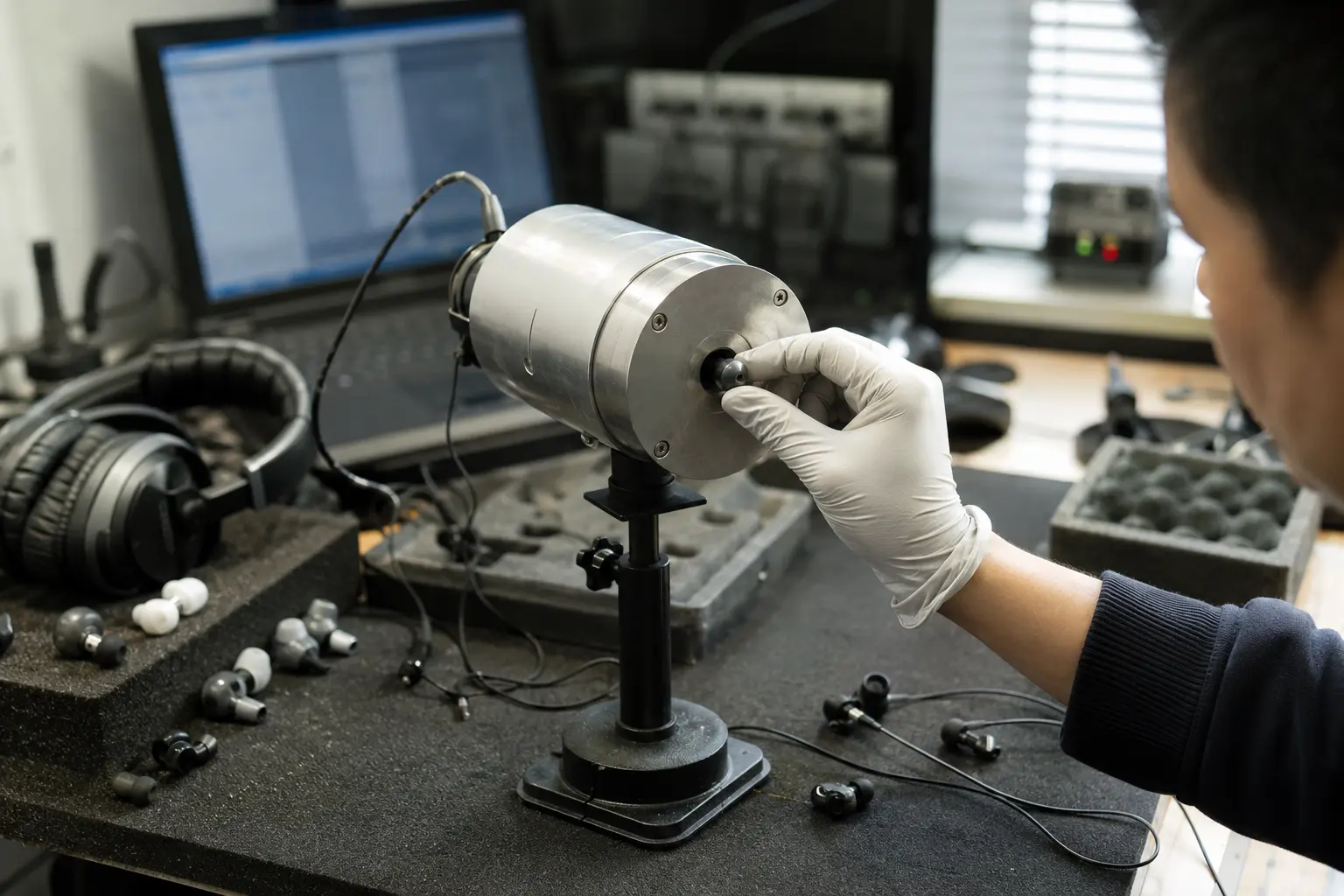
Review the agreed acoustic and microphone measurements for the selected configuration.
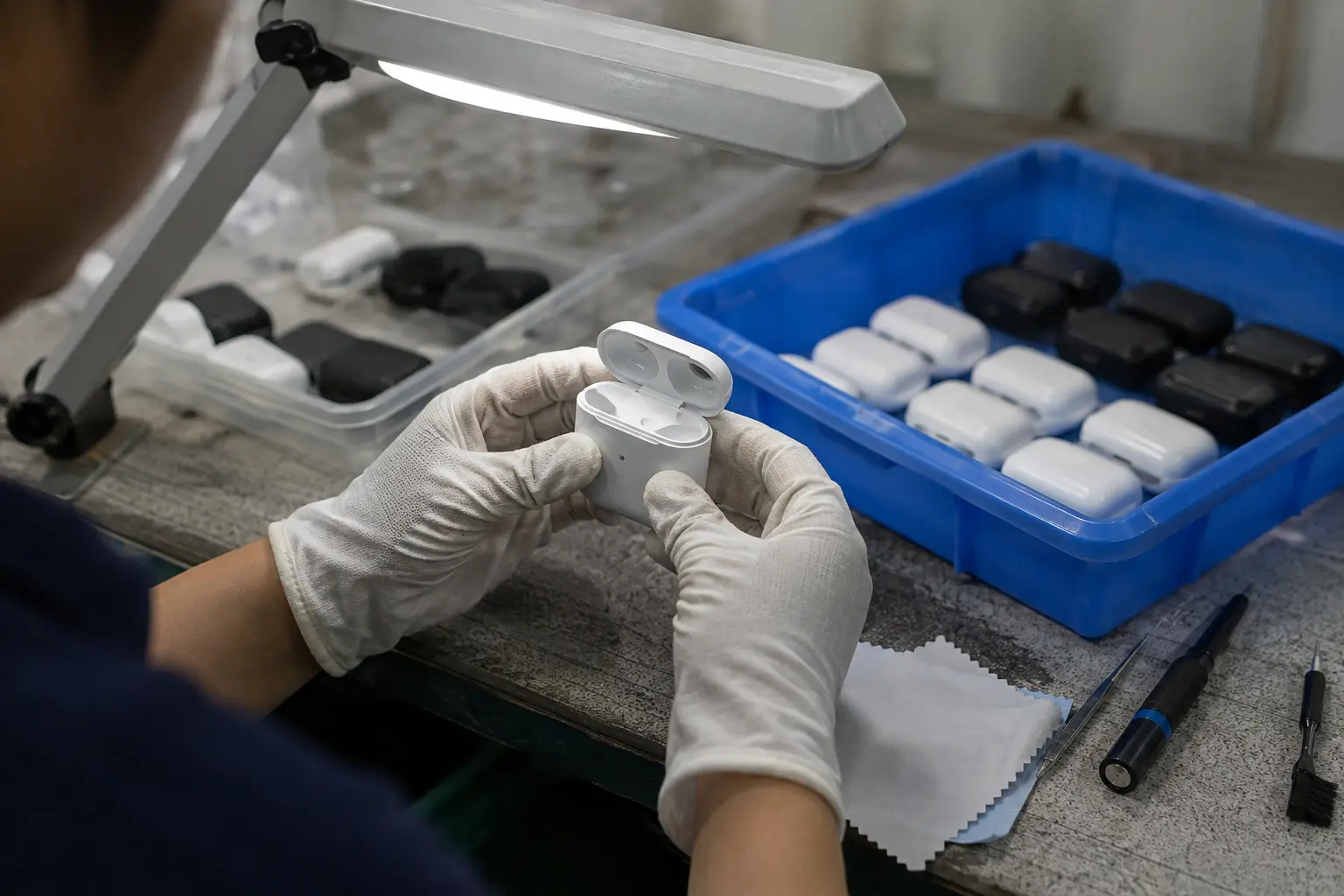
Compare finish, assembly and cosmetic criteria with the approved reference.
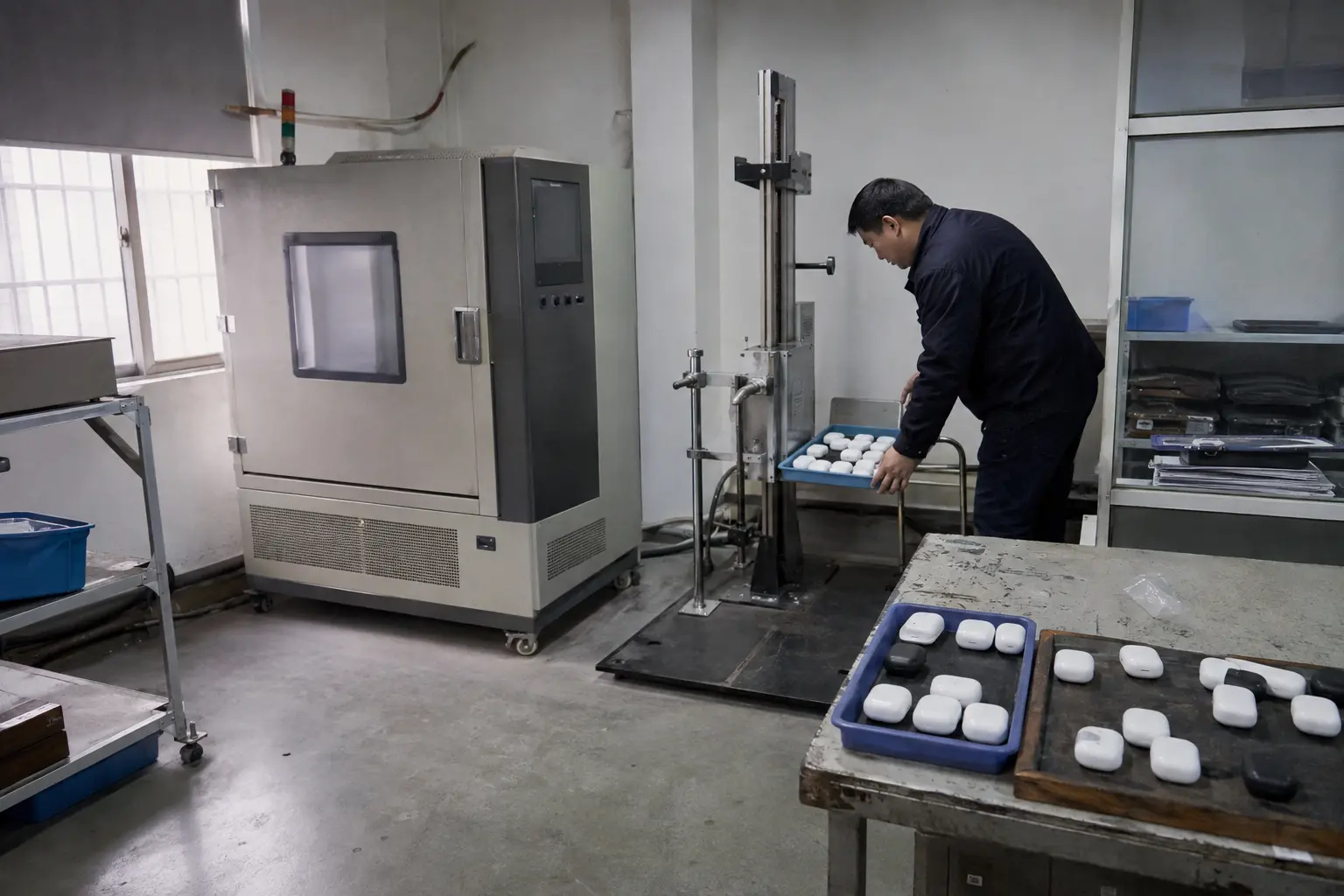
Define applicable handling, environmental and cycle checks before testing.
Workflow visuals support process discussion. Production location, equipment availability and project evidence are confirmed separately for the selected program.
Control points from sample to shipment.
Acceptance criteria needs to be agreed before production, not negotiated after a problem.
- 01
Specification lock
Confirm model, functions, cosmetic standard, packaging and test scope.
- 02
Sample approval
Record the approved sample and any open deviations.
- 03
Incoming control
Check applicable materials and components against the production plan.
- 04
In-process control
Monitor assembly, function and workmanship at defined checkpoints.
- 05
Final inspection
Review finished product and packaging against agreed criteria.
- 06
Release evidence
Confirm required records and shipment documentation before release.
Define acceptance before testing.
Send the intended market, required standard, use environment, critical functions and inspection expectation with the RFQ.