
B2B BULK ORDERS·MODEL SHORTLIST·SAMPLES BEFORE PRODUCTION·CHINA / VIETNAM ROUTE REVIEW
OEM / ODM EARBUD MANUFACTURING

Start with the target. Use the route that can actually meet it.

We first understand the user, market, quantity, price position, must-have functions and launch date. Then we determine whether an existing platform, supported customization or structured ODM development is the workable route—and coordinate it through shipment.

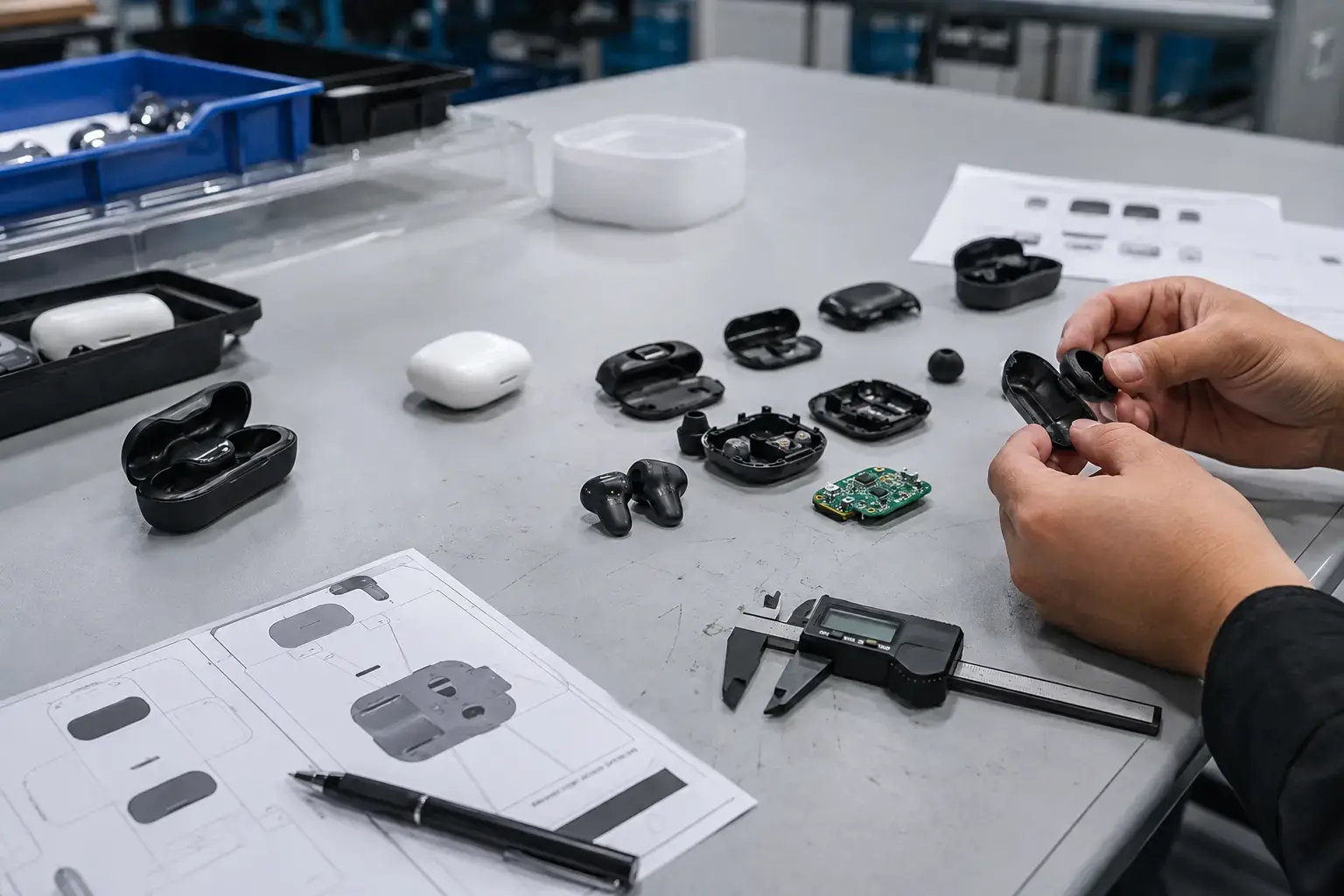
Wireless earbud prototypes, housing parts, electronics and packaging materials prepared for an OEM and ODM project review
Product architecture, customization depth and approval evidence are reviewed before the manufacturing route is fixed.
ROUTE QUALIFICATION

The project name does not define the work.

Buyers often use OEM, ODM and private label interchangeably. The practical route is determined by what must change, which parts require new engineering and what evidence is needed before production release.

PROVEN-PLATFORM ROUTEConfigure, brand, sample and approveDEVELOPMENT ROUTEDesign, engineer, validate and industrialize
Qualify your project route
OEM

Customize an existing model.

Best when the core product is suitable and differentiation is concentrated in branding, color, packaging and shortlisted model functions.

  • Existing product architecture
  • Shorter definition path
  • Lower tooling exposure
  • Platform-dependent feature options
  • Suitable for gifts and private label
Open the OEM manufacturing guide →
ODM

Develop a more differentiated product.

Used when requirements cannot be met through the available mechanics, electronics, firmware, acoustics or user experience.

  • Industrial and mechanical design
  • Electronics and firmware work
  • Acoustic engineering
  • Tooling and validation
  • Pilot and production approval gates
Open the ODM development guide →
DECISION MATRIX

Which route fits the requirement?

The route is based on the actual change request, not the name a buyer gives the project.

Starting pointExisting verified platformNew or materially changed product definition
Typical scopeBrand, color, packaging and selected optionsMechanical, electronic, firmware or acoustic development
ToolingOften avoidable unless a new part is requiredLikely when geometry or mechanical structure changes
EngineeringPlatform screening and released configurationStructured multi-discipline development
ValidationConfirm the configured product and market needsValidate new design elements and approved configuration
Best fitFaster branded programsDifferentiated private-label or retail programs
SCOPE TRIGGERS

When a platform customization becomes development.

Any of these changes can move the project toward ODM or a hybrid route.

Review the full ODM development scope →
01New industrial designDETAILS →02New housing or charging caseDETAILS →03PCBA or antenna changeDETAILS →04New control or firmware behaviorDETAILS →05App or OTA requirementDETAILS →06Acoustic architecture or tuning targetDETAILS →07New accessory interfaceDETAILS →08Configuration-specific compliance workDETAILS →
APPROVAL GATES

Do not move forward on assumptions.

  1. 1Requirement lock
  2. 2Design review
  3. 3Engineering sample
  4. 4Validation
  5. 5Pilot approval
  6. 6Mass production
COMMERCIAL CONTROL

Four decisions prevent avoidable development loops.

Cost and timing cannot be evaluated responsibly until these boundaries are visible.

01

Target

Who will use the product, where it will sell and the target price position

02

Must-have

Functions that cannot be traded against cost, size, battery or schedule

03

Change depth

What can stay on the platform and what must be newly designed

04

Approval owner

Who signs product, artwork, validation scope and production release

PROJECT INPUTS

What the buyer should provide.

The more complete the initial brief, the faster we can separate OEM options from true development work.

Product concept or referenceTarget user and sales channelMust-have functionsTarget price and forecastDestination marketsIndustrial-design files if availableLaunch and sample datesApproval and compliance expectations