
B2B BULK ORDERS·MODEL SHORTLIST·SAMPLES BEFORE PRODUCTION·CHINA / VIETNAM ROUTE REVIEW
CUSTOM EARBUD ENGINEERING

Custom earbud engineering for OEM and ODM programs.

Assess housing feasibility, fit, internal architecture, electronics, firmware, connectivity and acoustics before prototypes, tooling or production release.

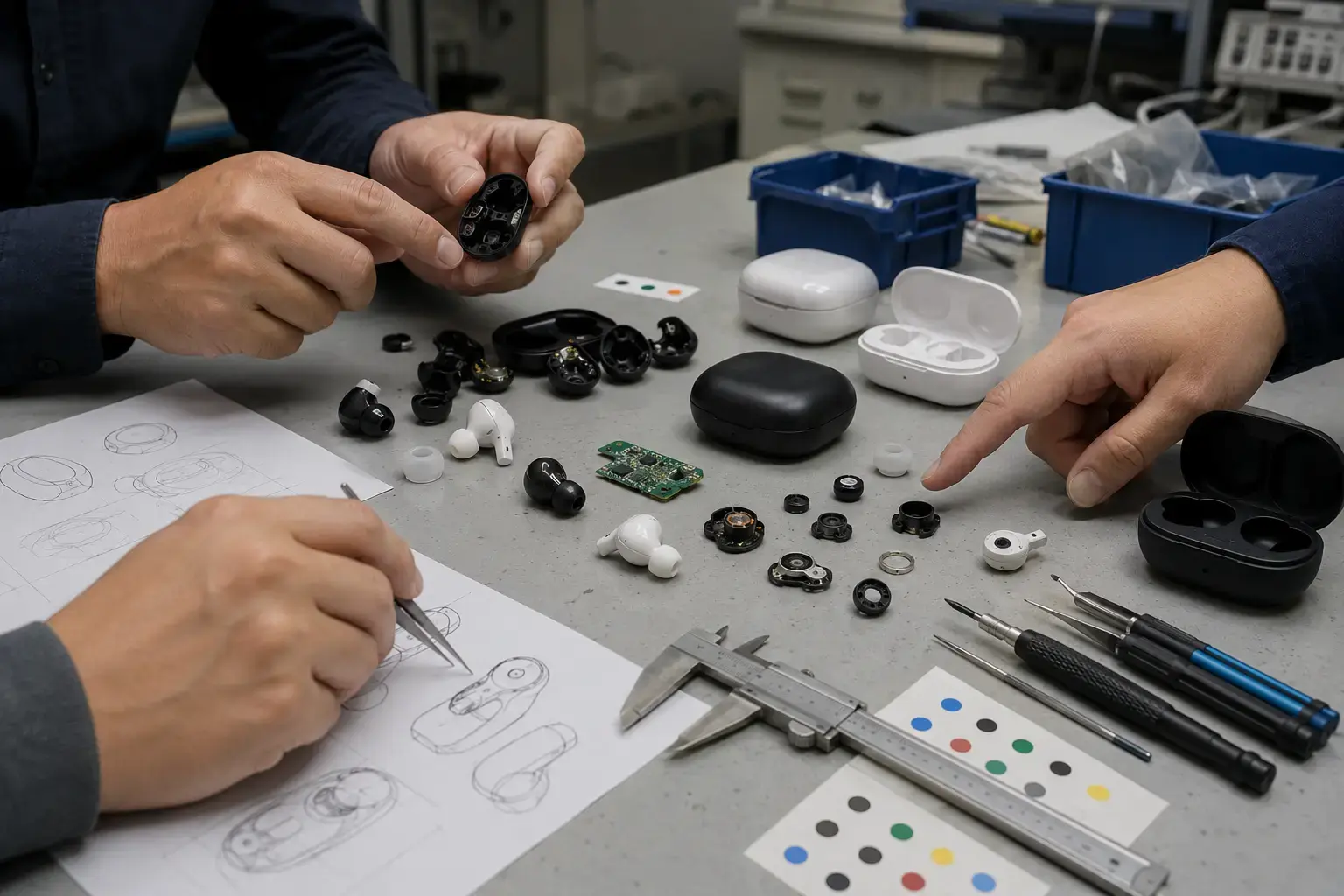
Earbud samples, housing parts, electronics and acoustic components reviewed together on an engineering workbench
Engineering visuals explain the workstream; project evidence and ownership are confirmed against the selected supplier and configuration.
SYSTEM ENGINEERING

One change can affect fit, wireless performance, sound and assembly.

The engineering route begins by separating supported platform options from changes that need new design, verification or tooling. This prevents a late mechanical change from becoming an antenna, acoustic or production problem.

INPUTProduct requirement, target user, price, market and scheduleOUTPUTControlled architecture, samples, issue status and release gates
Request an engineering review
SYSTEM APPROACH

An earbud is one connected product system.

A change to housing, antenna space, battery, microphone path, controls or acoustic cavity can affect other disciplines. Engineering reviews these interfaces before the project commits to tooling or validation.

INTERFACE REVIEWS

Resolve cross-discipline risks early.

These interfaces commonly drive redesign, sample iteration or validation work.

01

Fit × acoustics

Wearing geometry changes cavity, seal and perceived sound

REVIEW INTERFACE →
02

Housing × antenna

Materials and internal layout affect wireless performance

REVIEW INTERFACE →
03

Battery × mechanics

Capacity, thickness, weight and thermal behavior compete for space

REVIEW INTERFACE →
04

Firmware × controls

Touch or button behavior must match hardware and user flow

REVIEW INTERFACE →
05

Packaging × compliance

Labels, manuals, battery marks and market files must align

REVIEW INTERFACE →
06

Tooling × assembly

Parting lines, tolerances, fastening and test access affect production

REVIEW INTERFACE →
DECISION GATES

Review before the next investment.

Each gate checks whether requirements, design, risks and evidence are ready for the next stage.

  1. 1Requirement review
  2. 2Architecture review
  3. 3Design freeze
  4. 4Tooling release
  5. 5EVT / DVT review
  6. 6PVT / MP release
CUSTOM HOUSING FEASIBILITY INPUTS

Show the physical idea and the constraints behind it.

  • Reference product, sketch, CAD or physical sample
  • Target wearing position and outer envelope
  • Required controls, microphones and charging method
  • Battery or runtime priority
  • Target market, price position and forecast
  • Prototype purpose and required date
FIRST REVIEW

Separate a viable platform change from new development.

Sales and engineering first identify packaging limits, internal component space, acoustic and antenna risks, tooling implications and the questions that must be closed before a prototype is quoted.

Request housing feasibility review
PRODUCT STARTING POINTS

Connect the engineering brief to a physical platform.

A catalog model can be used as a reference or starting point. Its final specification, functions and engineering scope still require project confirmation.