White label, private label or ODM?
White label keeps the base product largely unchanged; private label defines a branded configuration; ODM is used when mechanics, electronics, firmware or acoustics require development.

Compare a white-label starting point, a controlled private-label configuration and ODM development; then define the model, logo, packaging, samples, market evidence and repeat-order baseline.
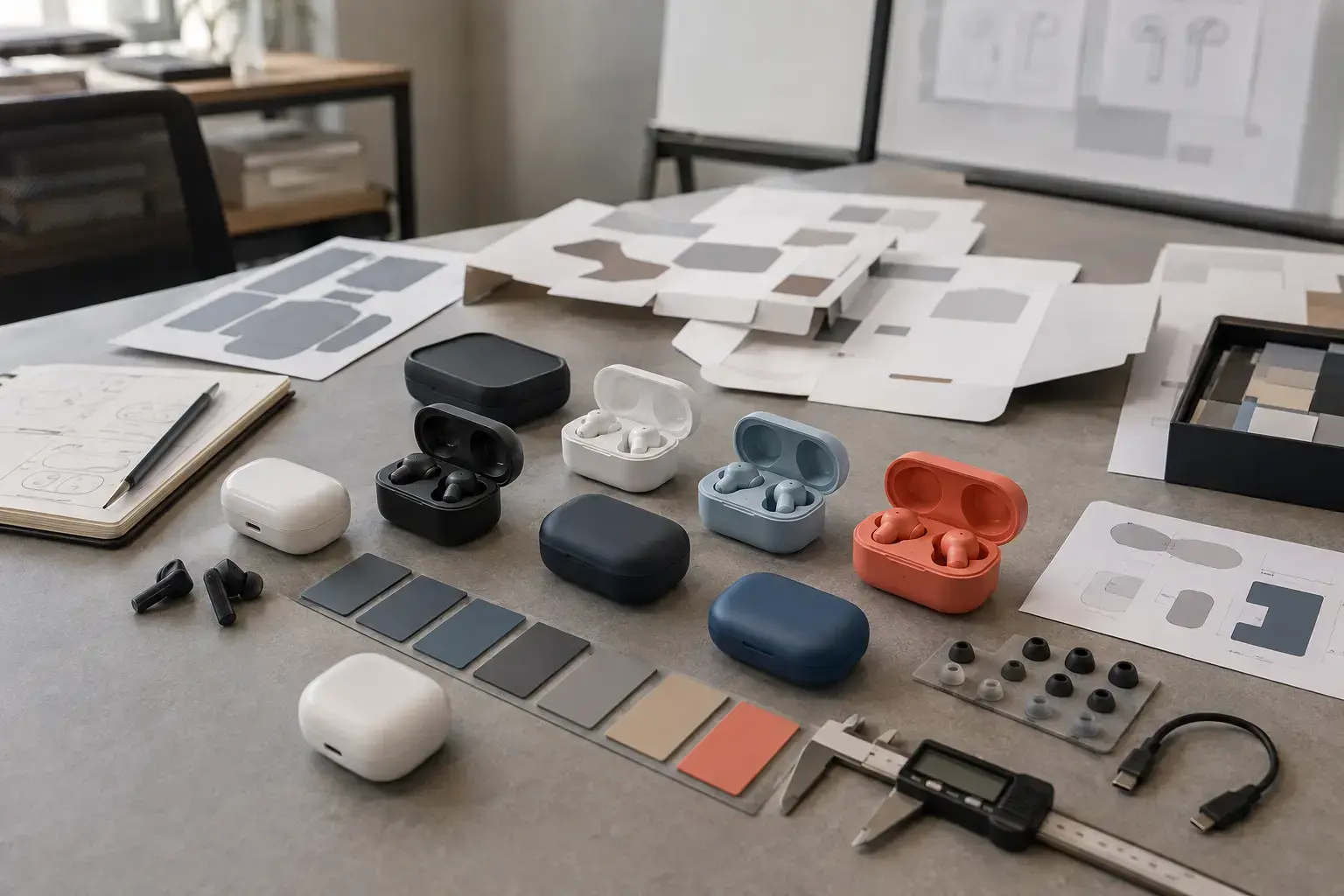
EarbudSource first checks what success means for the buyer, then determines whether an available model, supported customization or ODM development is the workable route.
Check this project’s feasibilityA useful supplier response states what is available, what needs confirmation and what requires development.
White label keeps the base product largely unchanged; private label defines a branded configuration; ODM is used when mechanics, electronics, firmware or acoustics require development.
Compare wearing style, functions, target user, destination market, price position and forecast before selecting a model.
Logo, CMF, packaging, accessories and platform-supported firmware or acoustic work must be confirmed against the selected model.
Approved hardware revision, functions, firmware, acoustics, CMF, accessories, packaging, labels and manuals.
Product and packaging samples, applicable market-evidence status, artwork freeze, acceptance criteria and production-release records.
Keep the approved configuration, component or firmware revisions, substitutions and shipment-release criteria visible.
Open questions and trade-offs are resolved before they become production or delivery problems.
These pages provide the next level of product, customization or market planning detail.
Both may start from an existing platform, but private-label work normally defines a more complete branded configuration, packaging and repeat-order baseline.
No. Private label can use a proven platform; ODM is appropriate when required product changes cannot be met through supported customization.
Platform-dependent prompts, controls, EQ, acoustic work and other firmware behavior can be reviewed after the product target and selected architecture are known.
Share the target user, sales channel, destination markets, quantity or forecast, price position, must-have functions, branding files, packaging direction and required date.
Share the market, use case, quantity, target position, must-have functions, branding and required date. We will screen the most workable route.