BATTERY & RELIABILITY TESTING

Test charging and durability against the intended use.

Battery, charging and reliability work should reflect the selected cell, firmware, enclosure, accessories, environment and buyer risk priorities.

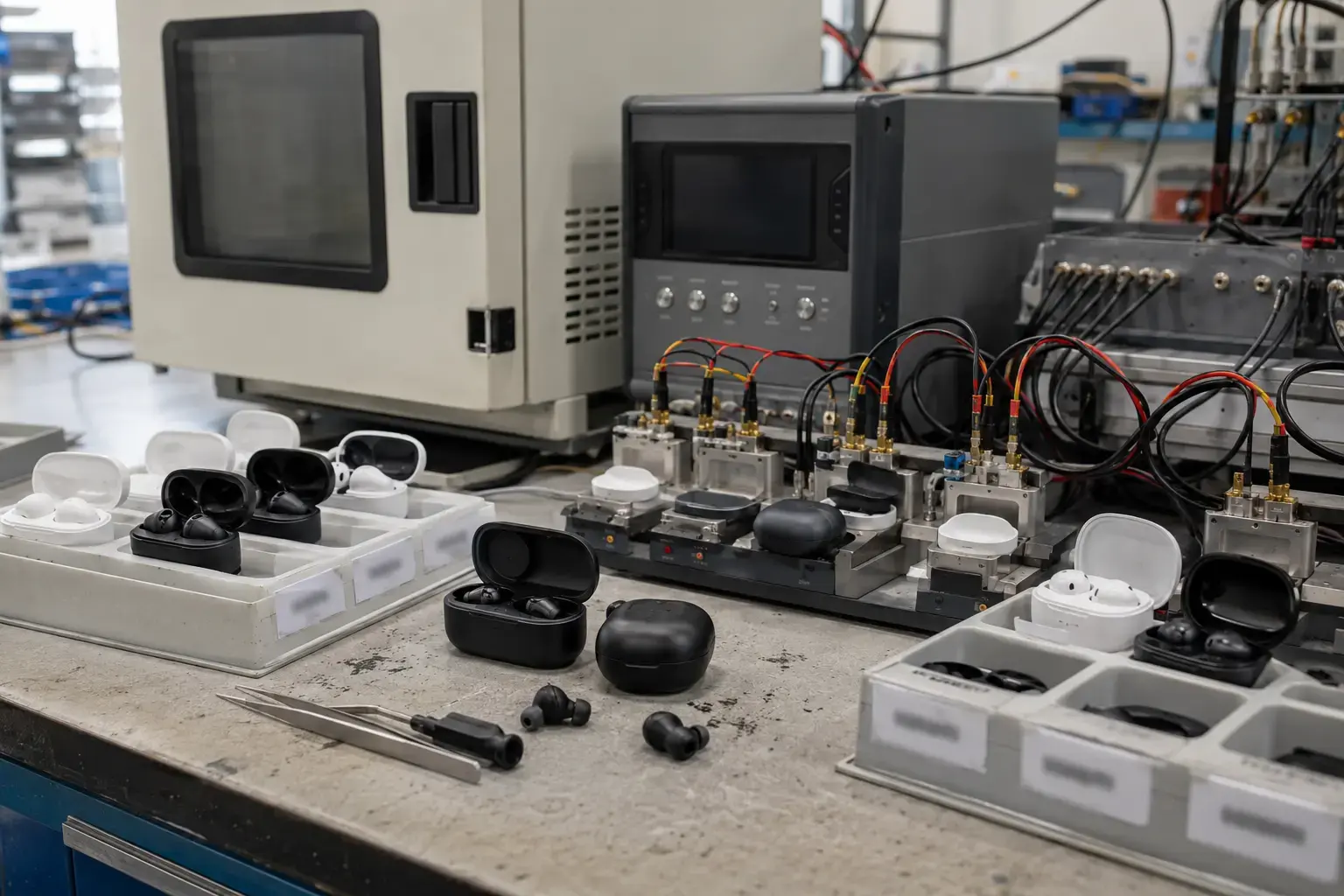
Generic TWS earbuds and charging cases arranged for charging-cycle and environmental reliability review
VALIDATION BASIS

Start with the approved product and acceptance criteria.

Equipment, methods, sample quantity, limits and reporting are agreed for the quoted model. This page explains the workstream; it does not publish invented test results.

Send testing requirements
REVIEW SCOPE

What the project team needs to define.

Each topic becomes a test or inspection item only when it applies to the final product and buyer requirement.

01

Charging system

Earbud, case, cable and protection behavior under the agreed charging conditions

02

Use-time evaluation

Defined playback, call, standby and recharge conditions for the shortlisted model

03

Mechanical handling

Project-appropriate drop, control-cycle, hinge or connector checks

04

Environment

Temperature, humidity, aging or ingress-related checks where required by the product brief

BUYER INPUTS

Information needed before work begins.

  • Cell and charging configuration
  • Firmware and power-state definition
  • Expected use and storage environment
  • Cycle count or handling condition
  • Sample quantity and acceptance limits
  • Required laboratory or report status
EXPECTED OUTPUTS

Records that support a decision.

  • Test conditions and sample record
  • Charging and discharge observations
  • Failure analysis and corrective action
  • Approved result or documented open risk
WORKFLOW

A traceable route from definition to disposition.

Changes to hardware, firmware, fit, packaging or test conditions may require a new review.

  1. 1Define risk
  2. 2Lock samples
  3. 3Set conditions
  4. 4Run evaluation
  5. 5Analyze failures
  6. 6Close actions