
ODM EARBUD DEVELOPMENT

Develop the product when platform customization is not enough.

ODM development applies when the requirement changes product architecture, user experience or industrial design. Each discipline needs a defined input, development output and approval gate.

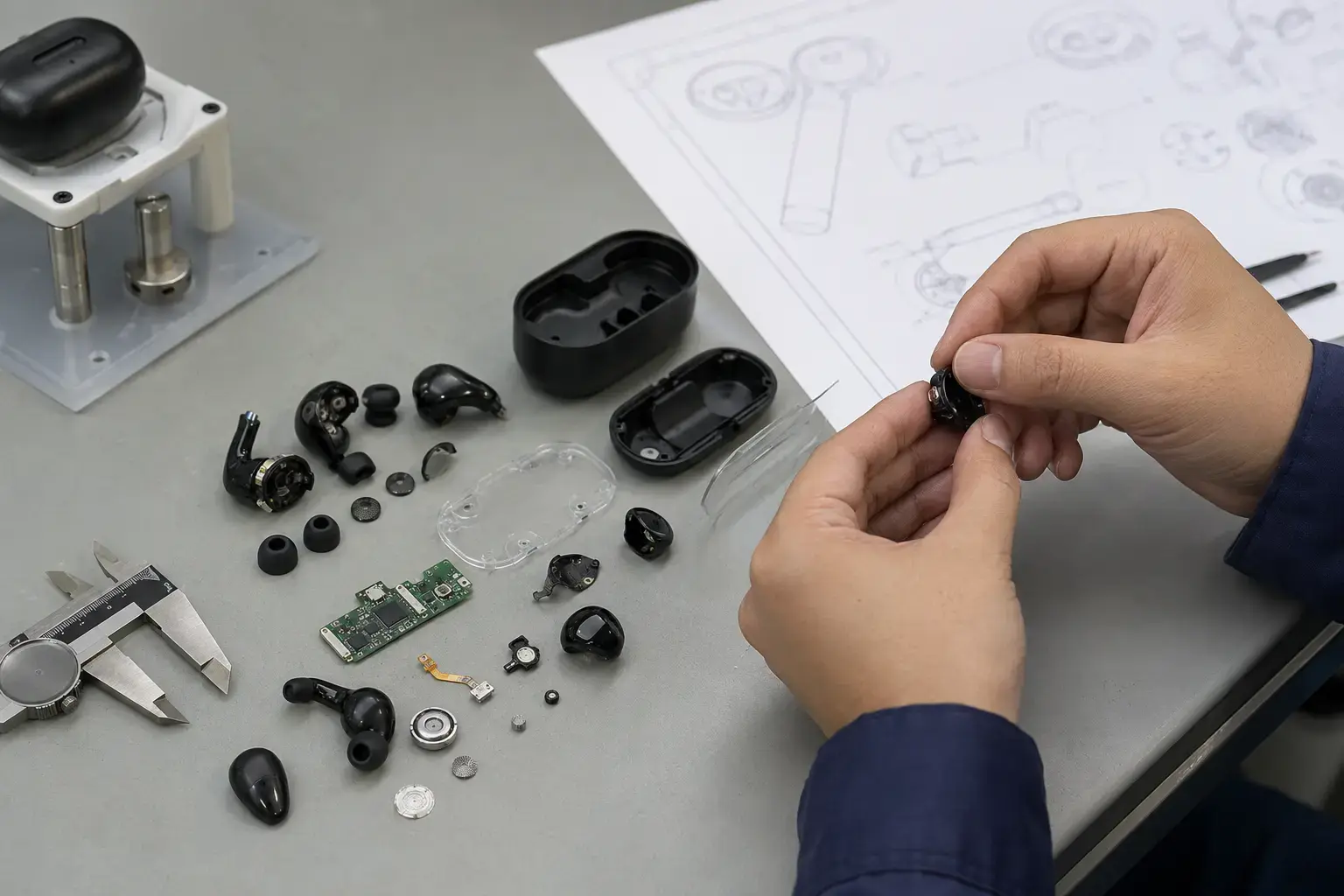
Wireless earbud housing parts, electronics, acoustic components and engineering tools reviewed during ODM product development
Visual context supports the workflow explanation; project evidence remains model-, supplier- and configuration-specific.
MANUFACTURING SCOPE

Define the route from the actual change request.

The purpose of an ODM route is not to add engineering for its own sake. It is to create differentiation that matters to the target user or channel while managing tooling, validation and production risk.

Request a route review
GOOD FIT

This route is suitable when:

  • New industrial design or wearing geometry creates commercial value
  • Mechanical structure or charging-case architecture must change
  • Electronics, antenna, firmware or control behavior needs development
  • Acoustic architecture, app integration or new tooling is justified
REVIEW ANOTHER ROUTE

Additional qualification is needed when:

  • The requirement can be met by an existing model
  • Differences are limited to logo, color, packaging or accessories
  • The commercial target cannot support tooling and validation exposure
  • The approval team or product requirement is not yet defined
ENGINEERING WORKSTREAMS

Each workstream ends with a reviewable output.

Files and validation activities are agreed for the selected product, development depth and destination market.

01

Product definition

Translate user, market and commercial targets into written requirements

Approved product requirement
02

Industrial & mechanical design

Resolve form, fit, internal architecture, interfaces and manufacturability

Reviewed design direction and mechanical definition
03

Electronics & firmware

Define Bluetooth, power, charging, microphones, controls and behavior

Released hardware and firmware configuration
04

Acoustic engineering

Develop driver, cavity, microphone path and tuning against the target

Tuning candidates and approval criteria
05

Tooling & verification

Release geometry, evaluate engineering builds and close design issues

Tooling samples and EVT / DVT status
06

Industrialization

Confirm BOM, process, inspection, pilot readiness and change control

PVT or mass-production release
PROJECT ROUTE

Move forward through visible decisions.

Open issues need a written disposition before the next cost, tooling, validation or production commitment.

  1. 01
    Requirement lockUse case, differentiation, constraints and approval criteria
  2. 02
    ArchitectureID, mechanics, electronics, firmware and acoustic direction
  3. 03
    Engineering buildsSamples, issue list and design updates
  4. 04
    Design validationDesign-intent configuration and agreed validation matrix
  5. 05
    Pilot productionManufacturing readiness and process feedback
  6. 06
    Mass productionReleased baseline, change control and shipment approval
BUYER INPUTS

Send enough information to qualify the scope.

Preliminary files are suitable for route screening. Final approved files are required before sample or production approval.

Submit this project brief
01Product requirement document02Reference products and desired differentiation03Target user and sales channel04Must-have and tradeable functions05Industrial-design files if available06Target price, forecast and launch plan07Destination markets08Approval owners and evidence expectations