Product architecture
Define earbud type, wearing concept, charging-case structure and internal zones
Architecture layout and open constraints
Coordinate earbud and charging-case form, fit, internal stack, materials, interfaces, tolerances and assembly before geometry is released for tooling.
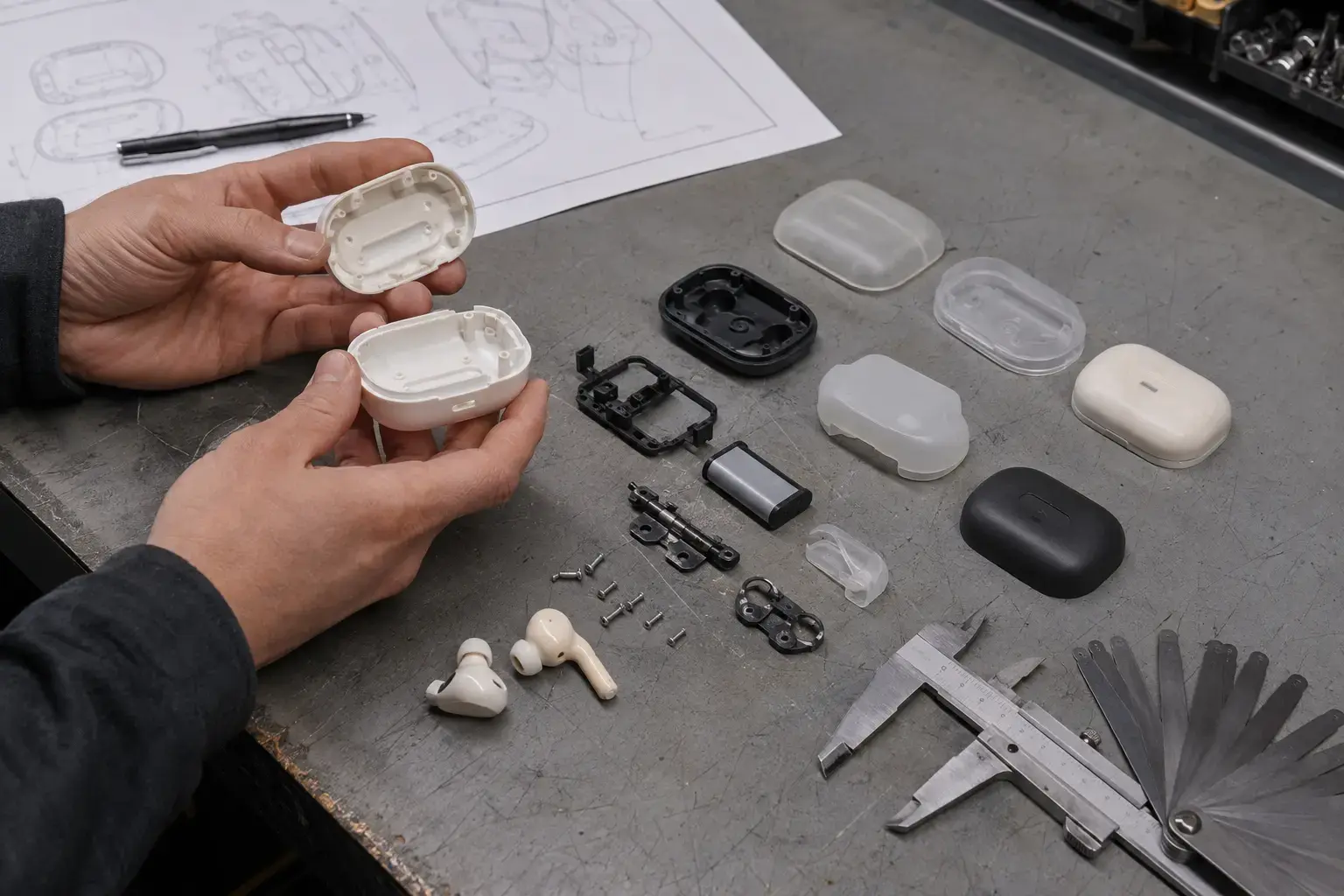
A visually attractive housing still has to contain the battery, PCB, antenna, microphones, driver, charging contacts and fastening features. Fit, acoustic volume, wireless clearance and assembly access must be reviewed together.
Request this engineering reviewThe actual work depends on whether the project uses an existing model, a modified architecture or a new development route.
Define earbud type, wearing concept, charging-case structure and internal zones
Architecture layout and open constraintsDevelop proportions, surfaces, controls, light windows and CMF direction
Reviewed design surfaces and appearance intentReview contact points, projection, weight distribution, ear-tip or hook geometry
Fit samples and evaluation criteriaPlace internal components, charging interfaces, fastening and sealing features
Mechanical definition and interface controlReview gaps, flushness, hinge, magnets, contacts and assembly sequence
Tolerance risks and build issue listCheck draft, parting line, wall thickness, ribs, snaps and tool access
Geometry ready for tooling-feasibility reviewA local change can create issues in another part of the product system.
Internal volume, vents and seal affect the tuning route
Materials, coatings and internal metal affect wireless behavior
Capacity, runtime target, weight and projection compete for space
Contacts, magnets, alignment and lid geometry must work together