Platform architecture
Select or review Bluetooth SoC, memory, sensors and supported functions
Electrical block definition and platform constraints
Coordinate Bluetooth platform, power, charging, microphones, controls, antenna integration and firmware states so the final sample matches the approved function definition.
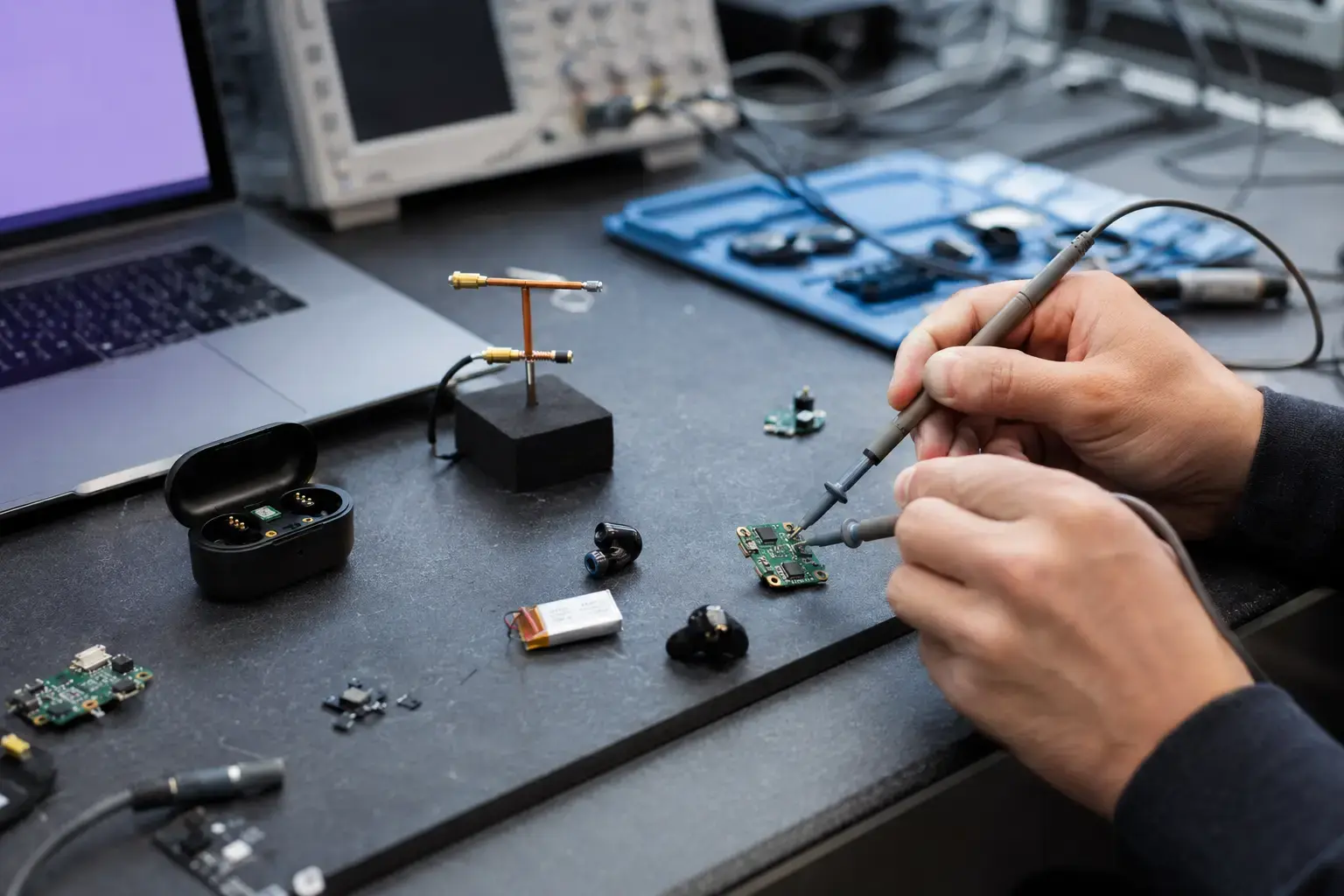
Changing the SoC, antenna zone, battery, microphones, controls or charging behavior can alter mechanics, wireless performance, power consumption and verification scope. Hardware revision and firmware version must remain traceable.
Request this engineering reviewThe actual work depends on whether the project uses an existing model, a modified architecture or a new development route.
Select or review Bluetooth SoC, memory, sensors and supported functions
Electrical block definition and platform constraintsDefine battery interface, protection, case charging, contacts and USB-C behavior
Power-state and charging definitionPlace microphones, touch or button inputs, indicators and feedback
Hardware interfaces and control mapReview antenna location, ground clearance, housing material and internal interference
Antenna layout review and verification planDefine pairing, prompts, controls, power states, resets and supported options
Version-controlled function specificationLink PCBA revision, firmware build, sample status and issue closure
Traceable engineering sample configurationA local change can create issues in another part of the product system.
Tap, press and button behavior must match the hardware input
Coatings, metal, battery and hand position can affect wireless behavior
Standby, charging and low-battery states shape actual use
Port geometry, sealing and assembly affect voice pickup