Acoustic target
Define application, product position, reference sound and priority tradeoffs
Target direction and comparison references
Review driver, cavity, venting, mesh, ear tips, seal, microphone path and tuning candidates against the product position and measurable approval criteria.
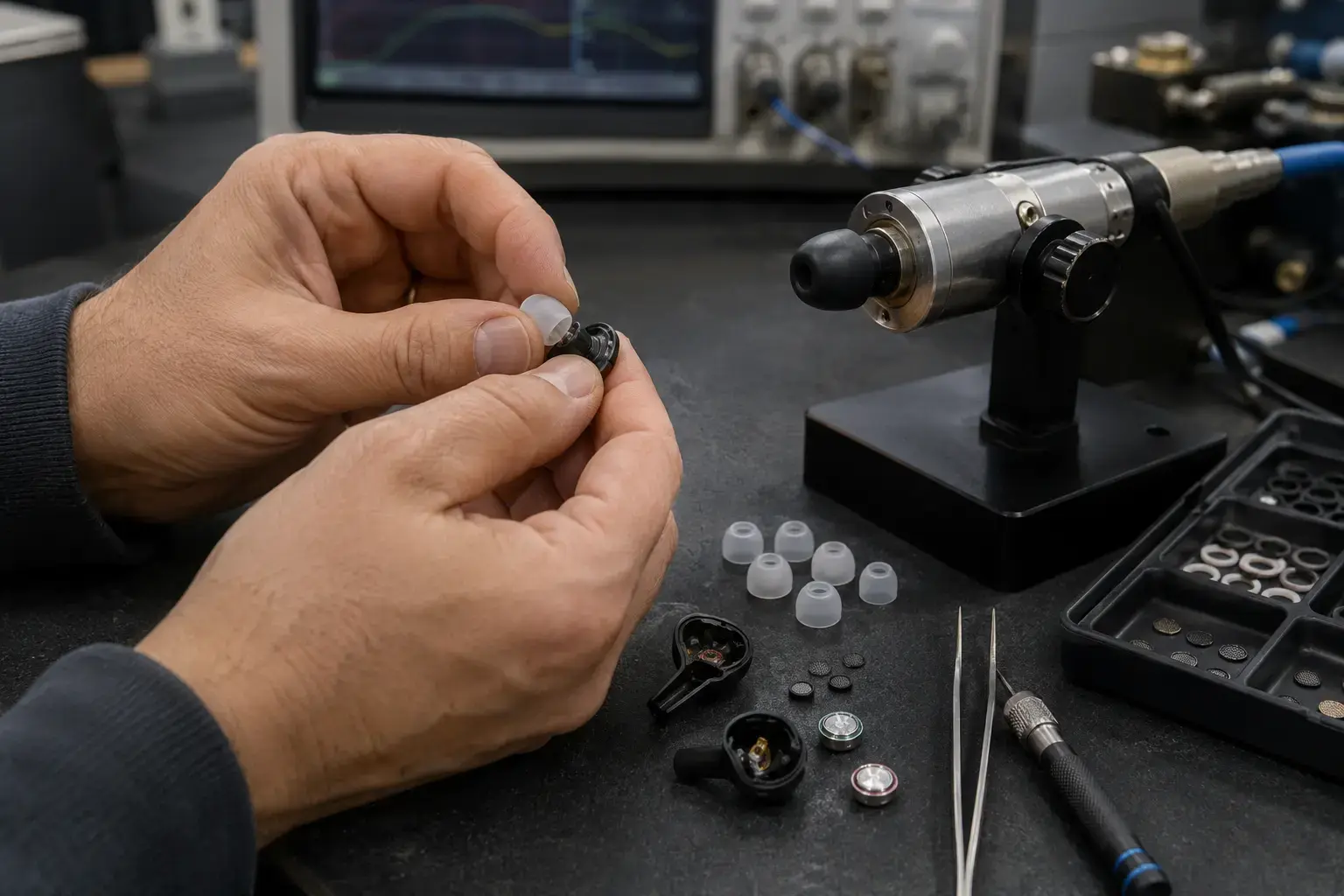
Earbud sound is shaped by mechanical volume, driver selection, venting, mesh, seal and wearing position. A tuning change may require mechanical or firmware work, and approval should combine measurements with repeatable listening references.
Request this engineering reviewThe actual work depends on whether the project uses an existing model, a modified architecture or a new development route.
Define application, product position, reference sound and priority tradeoffs
Target direction and comparison referencesReview driver, rear and front volume, damping and vent structure
Acoustic architecture and constraintsEvaluate ear tips, insertion, leakage, open-ear geometry or fit variation
Fit-related acoustic risk listReview call, feedback or feed-forward microphone ports and mesh
Microphone-path definitionDevelop supported DSP / EQ and mechanical tuning combinations
Versioned tuning samplesCompare frequency response, balance, distortion where applicable and listening review
Approved tuning reference and limitsA local change can create issues in another part of the product system.
Seal and insertion depth can change bass and tonal balance
Protective materials add acoustic resistance and variation
Internal ribs, battery and PCB restrict acoustic volume
DSP, volume steps and modes must match the approved target